- Jarod Kintz1537
- Beryl Dov878
- Debasish Mridha771
- Steve Maraboli285
- Cassandra Clare242
- Stephen Richards242
- J.K. Rowling215
- Oscar Wilde180
- John Green177
- Paulo Coelho176
- Rick Riordan153
- Criss Jami151
- C.S. Lewis142
- Nicholas Sparks142
- Albert Einstein141
- William Shakespeare135
- Friedrich Nietzsche129
- C. JoyBell C.128
- Stephen King127
- Mark Twain125
- Terry Pratchett117
- Ralph Waldo Emerson116
- Neil Gaiman114
- Richelle Mead109
- Haruki Murakami98
- Toba Beta95
- Rumi94
- Suzanne Collins94
- Amy Leigh Mercree91
- Lailah Gifty Akita91
- Shannon L. Alder88
- Santosh Kalwar87
- Jodi Picoult86
- Jane Austen84
- Kurt Vonnegut81
- Sarah Dessen81
- Carl Sagan80
- Jaachynma N.E. Agu79
- Chuck Palahniuk78
- Anonymous77
- T.F. Hodge77
- Maya Angelou76
- Virginia Woolf75
- Douglas Adams74
- Mahatma Gandhi74
- Albert Camus72
- Charles Bukowski72
- Leo Tolstoy72
- Mitch Albom71
- Amit Ray70
- Henry David Thoreau70
- Ray Bradbury66
- Sylvia Plath66
- Kahlil Gibran65
- Elizabeth Gilbert63
- Ernest Hemingway62
- Veronica Roth62
- Victor Hugo62
- Emily Dickinson61
- J.R.R. Tolkien61
- Suzy Kassem59
- Bill Watterson57
- George Carlin57
- Plato57
- Abraham Lincoln56
- Jim Butcher56
- Ayn Rand54
- Lemony Snicket54
- Steve Backley54
- Anaïs Nin53
- G.K. Chesterton53
- Dr. Seuss52
- Edgar Allan Poe51
- Colleen Houck50
- Johann Wolfgang von Goethe49
- Jonathan Safran Foer49
- Lisa Kleypas49
- Marilyn Monroe49
- George Bernard Shaw48
- F. Scott Fitzgerald47
- Martin Luther King Jr.47
- Markus Zusak46
- Bertrand Russell45
- Charlotte Brontë44
- Confucius44
- Lao Tzu44
- Lauren Oliver44
- Voltaire44
- Aristotle43
- Brian Tracy43
- David Levithan43
- Helen Keller43
- Jeaniene Frost43
- Marcus Aurelius43
- Margaret Atwood43
- Robert Frost43
- Stephen Chbosky43
- Winston S. Churchill43
- Charles Dickens42
- Rachel Caine42
- Joseph Campbell41
- Mother Teresa41
- Woody Allen41
- Aberjhani40
- James Patterson40
- Rainer Maria Rilke40
- William Blake40
- George Eliot39
- Hermann Hesse39
- Karl Lagerfeld39
- Pablo Neruda39
- Rainbow Rowell38
- Steven Wright38
- T.S. Eliot38
- Walt Whitman38
- Anne Lamott37
- Dorothy Parker37
- Fyodor Dostoyevsky37
- Napoleon Hill37
- Stephenie Meyer37
- Antoine de Saint-Exupéry36
- Arthur Schopenhauer36
- Benjamin Franklin36
- Benny Bellamacina36
- Christopher Hitchens36
- Gabriel García Márquez36
- John Lennon36
- Peter Kreeft36
- Thomas Jefferson36
- W. Somerset Maugham36
- A.A. Milne35
- L.M. Montgomery35
- Laurell K. Hamilton35
- Maggie Stiefvater35
- Dejan Stojanovic34
- Gayle Forman34
- George Orwell34
- George R.R. Martin34
- Israelmore Ayivor34
- Becca Fitzpatrick33
- Brandon Sanderson33
- Gautama Buddha33
- Jeanette Winterson33
- Robert M. Drake33
- Bauvard32
- Dalai Lama XIV32
- Dashama Konah Gordon32
- Deepak Chopra32
- E.E. Cummings32
- Flannery O'Connor32
- Graham Greene32
- Gustave Flaubert32
- J.D. Salinger32
- Jean-Paul Sartre32
- Lewis Carroll32
- Mandy Hale32
- Oprah Winfrey32
- Cormac McCarthy31
- Jennifer Elisabeth31
- Jostein Gaarder31
- Madeleine L'Engle31
- P.G. Wodehouse31
- Richard Dawkins31
- Søren Kierkegaard31
- Ursula K. Le Guin31
- Carlos Ruiz Zafón30
- Charles M. Schulz30
- Christopher Paolini30
- Ellen DeGeneres30
- Jennifer L. Armentrout30
- Orson Scott Card30
- Seneca30
- Socrates30
- Dan Brown29
- Eleanor Roosevelt29
- Eoin Colfer29
- Isaac Asimov29
- John Steinbeck29
- Robert A. Heinlein29
- Roman Payne29
- Taylor Swift29
- Ann Brashares28
- Franz Kafka28
- Groucho Marx28
- Tom Robbins28
- Yann Martel28
- Alberto Manguel27
- Ambrose Bierce27
- Dale Carnegie27
- Gena Showalter27
- Harper Lee27
- Henry Wadsworth Longfellow27
- Jack Kerouac27
- Joss Whedon27
- Louisa May Alcott27
- Michelle Hodkin27
- Milan Kundera27
- Nora Roberts27
- Richard Bach27
- Steve Jobs27
- Umberto Eco27
- Vladimir Nabokov27
- A.D. Posey26
- Alexandre Dumas26
- Colleen Hoover26
- Hunter S. Thompson26
- Jess C. Scott26
- Michel de Montaigne26
- Neil deGrasse Tyson26
- Philip Pullman26
- Sam Harris26
- Thomas Merton26
- William James26
- Amit Kalantri25
- Benjamin Disraeli25
- Charlaine Harris25
- Gordon B. Hinckley25
- Henry Miller25
- Henry Ward Beecher25
- J.R. Ward25
- Julie Kagawa25
- Ludwig Wittgenstein25
- Zig Ziglar25
- Bob Marley24
- Elbert Hubbard24
- Frank Herbert24
- George Gordon Byron24
- Mae West24
- P.C. Cast24
- Roald Dahl24
- Sherrilyn Kenyon24
- Sujit Lalwani24
- Ally Carter23
- Audrey Niffenegger23
- Fulton J. Sheen23
- Ilona Andrews23
- Jasper Fforde23
- John Keats23
- Khaled Hosseini23
- Leonardo da Vinci23
- Libba Bray23
- Martin Luther23
- Mary Oliver23
- Rabindranath Tagore23
- Stephen Hawking23
- Alan W. Watts22
- Aldous Huxley22
- Alfred Lord Tennyson22
- Augustine of Hippo22
- Cecelia Ahern22
- David Mitchell22
- Dean Koontz22
- E.M. Forster22
- Malcolm X22
- Michael Crichton22
- Pablo Picasso22
- Patricia Briggs22
- Samuel Johnson22
- Shannon Hale22
- Sophie Kinsella22
- Tahereh Mafi22
- Toni Morrison22
- Allan Lokos21
- Anne Frank21
- Brennan Manning21
- Dada Bhagwan21
- David Foster Wallace21
- Janet Evanovich21
- Joel Osteen21
- John F. Kennedy21
- Joyce Meyer21
- Julia Quinn21
- Nelson Mandela21
- Richard Feynman21
- Richelle E. Goodrich21
- Shel Silverstein21
- Theodore Roosevelt21
- William Faulkner21
- William Goldman21
- Allen Klein20
- Anton Chekhov20
- Audrey Hepburn20
- Barack Obama20
- Blaise Pascal20
- Christopher Moore20
- David Sedaris20
- Emily Brontë20
- Francis Bacon20
- H.L. Mencken20
- Kristin Cashore20
- L.J. Smith20
- Langston Hughes20
- Laurie Halse Anderson20
- Marcus Tullius Cicero20
- Max Lucado20
- Melina Marchetta20
- Nick Hornby20
- Patrick Ness20
- Patrick Rothfuss20
- Robert Louis Stevenson20
No authors found.
Show morePick an author to see their quotes.
T.S. Eliot Quotes: 38
Four QuartetsFor last year's words belong to last year's language And next year's words await another voice.
Only those who will risk going too far can possibly find out how far one can go.
The Use of Poetry and the Use of CriticismTo do the useful thing, to say the courageous thing, to contemplate the beautiful thing: that is enough for one man's life.
This is the way the world endsNot with a bang but a whimper.
Four QuartetsWe shall not cease from explorationAnd the end of all our exploringWill be to arrive where we startedAnd know the place for the first time.
Do I dare Disturb the universe? In a minute there is time For decisions and revisions which a minute will reverse.
Sometimes things become possible if we want them bad enough.
I said to my soul, be still and wait without hope, for hope would be hope for the wrong thing; wait without love, for love would be love of the wrong thing; there is yet faith, but the faith and the love are all in the waiting. Wait without thought, for you are not ready for thought: So the darkness shall be the light, and the stillness the dancing.
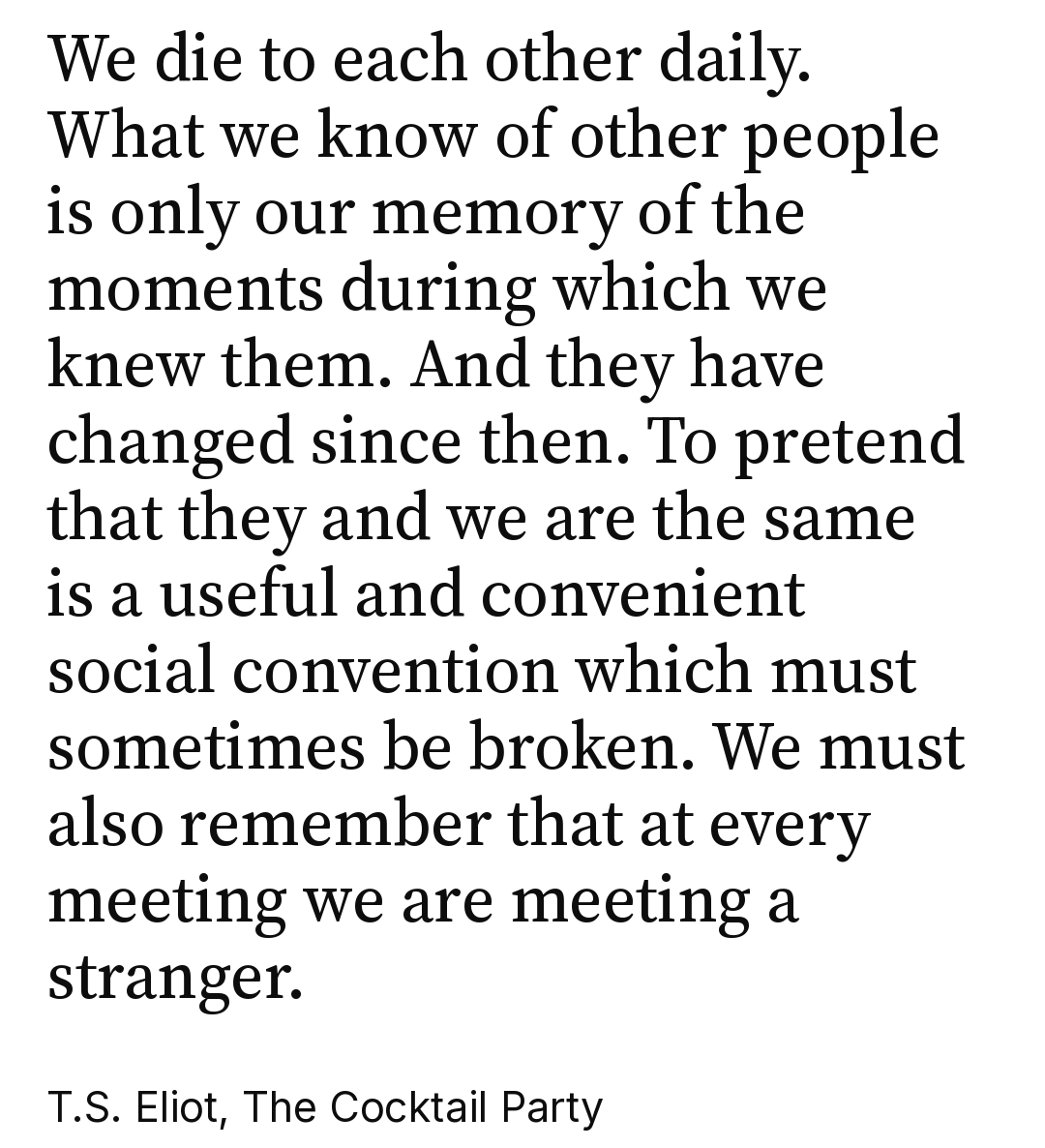
The Cocktail PartyWe die to each other daily. What we know of other people is only our memory of the moments during which we knew them. And they have changed since then. To pretend that they and we are the same is a useful and convenient social convention which must sometimes be broken. We must also remember that at every meeting we are meeting a stranger.
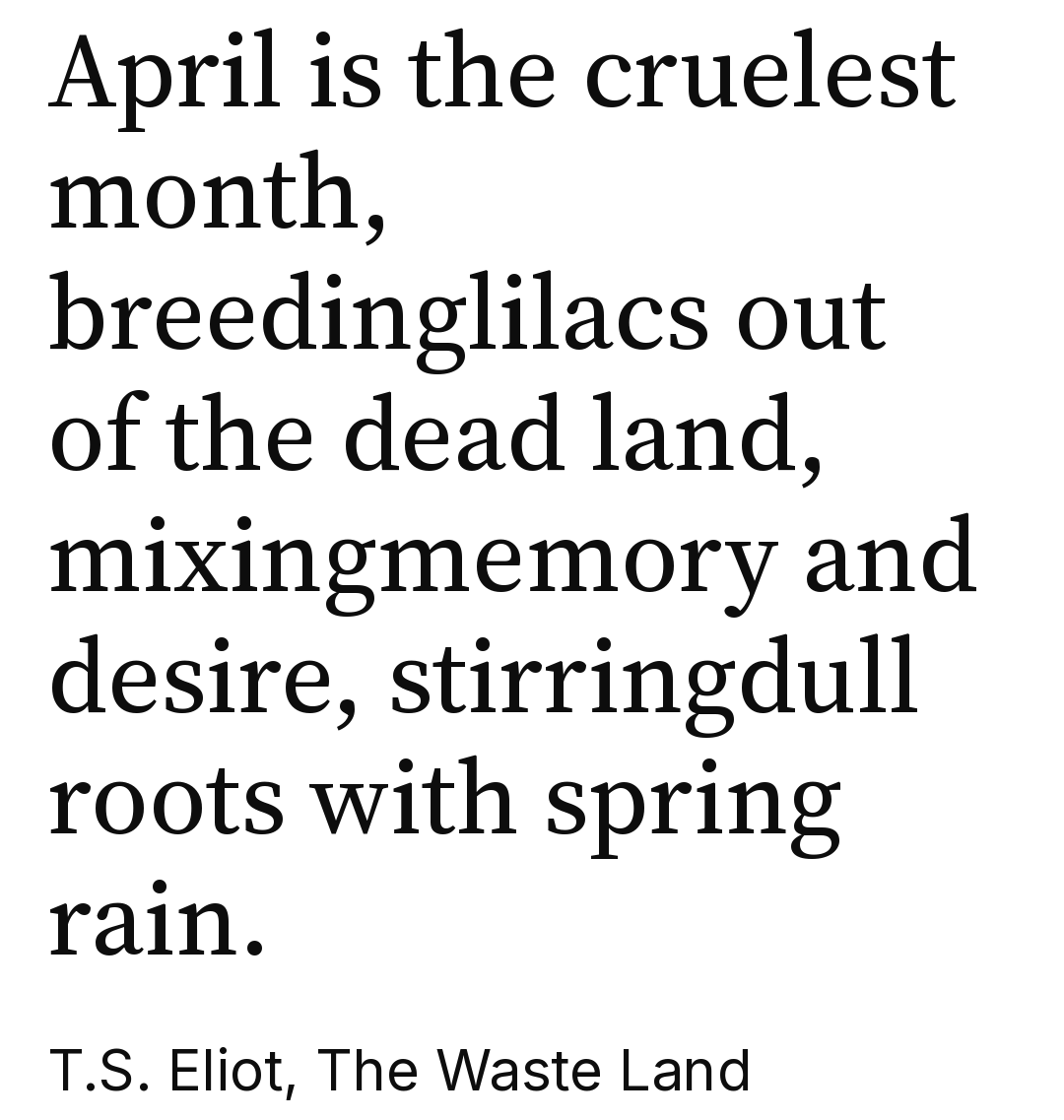
The Waste LandApril is the cruelest month, breedinglilacs out of the dead land, mixingmemory and desire, stirringdull roots with spring rain.
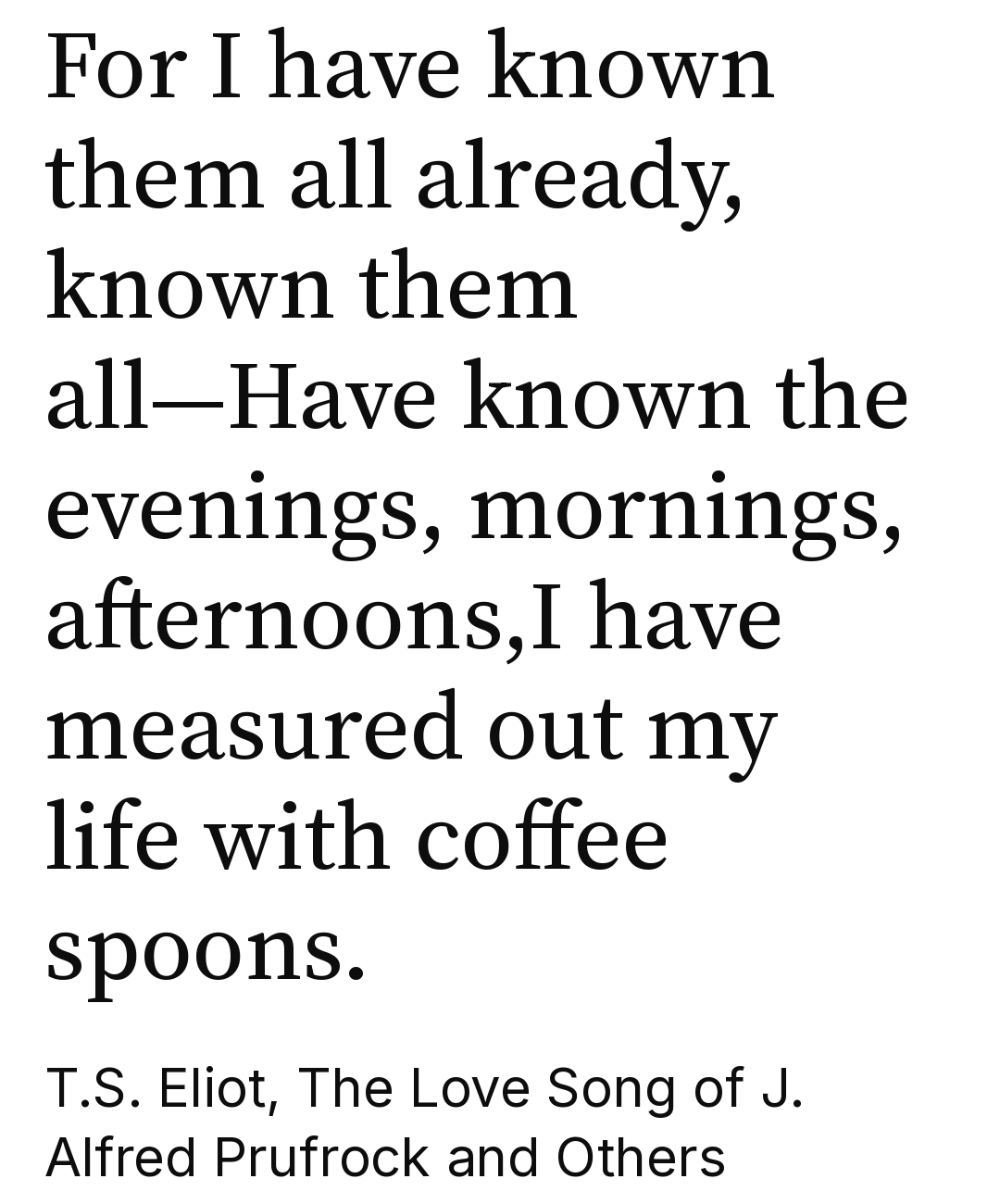
The Love Song of J. Alfred Prufrock and OthersFor I have known them all already, known them all—Have known the evenings, mornings, afternoons,I have measured out my life with coffee spoons.
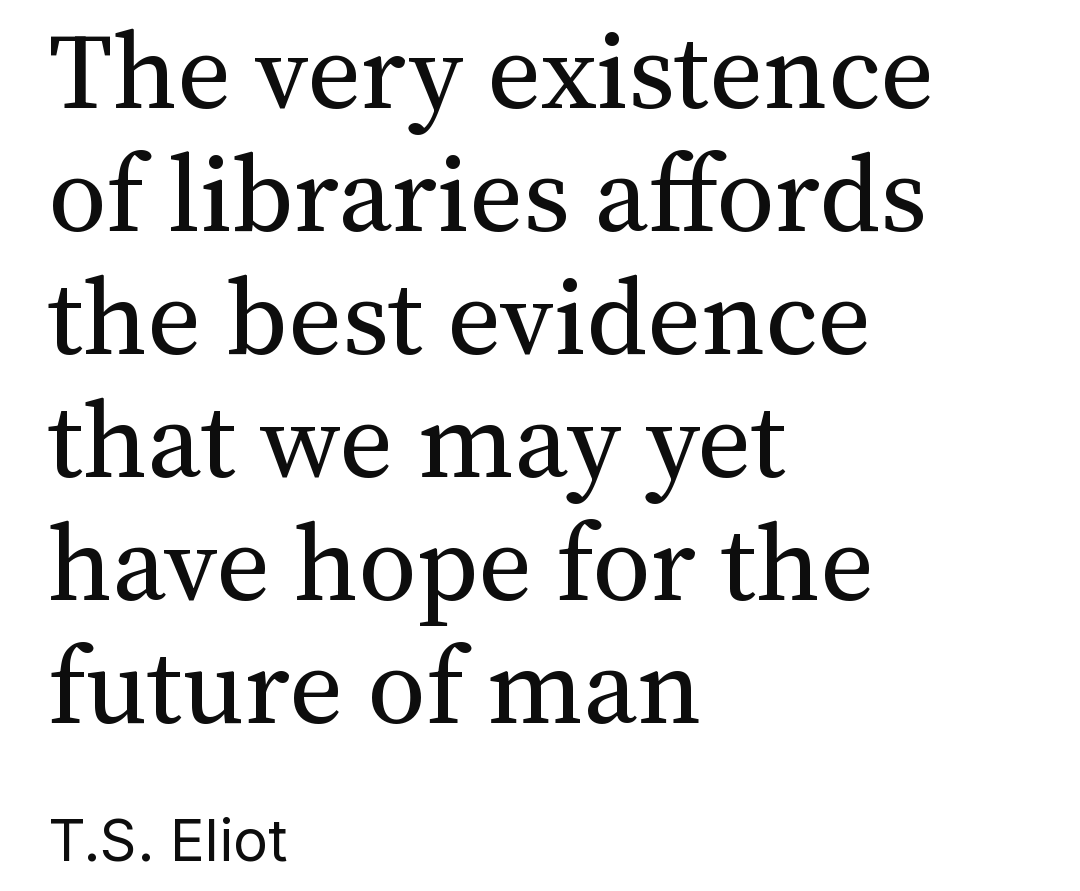
The very existence of libraries affords the best evidence that we may yet have hope for the future of man
Genuine poetry can communicate before it is understood.
There will be time, there will be timeTo prepare a face to meet the faces that you meet.
Poems: 1909-1925We are the hollow menWe are the stuffed menLeaning togetherHeadpiece filled with straw. Alas!Our dried voices, whenWe whisper togetherAre quiet and meaninglessAs wind in dry grassOr rats' feet over broken glassIn our dry cellarShape without form, shade without colour,Paralysed force, gesture without motion;- The Hollow Men
If you haven’t the strength to impose your own terms upon life, then you must accept the terms it offers you.
Time for you and time for me, And time yet for a hundred indecisions, And for a hundred visions and revisions, Before the taking of a toast and tea.
Whatever you think, be sure it is what you think; whatever you want, be sure that is what you want; whatever you feel, be sure that is what you feel.
Some editors are failed writers, but so are most writers.
Anxiety is the handmaiden of creativity
Poetry is not a turning loose of emotion, but an escape from emotion; it is not the expression of personality but an escape from personality. But, of course, only those who have personality and emotion know what it means to want to escape from these.
The Sacred WoodImmature poets imitate; mature poets steal.
Four QuartetsTime present and time pastAre both perhaps present in time futureAnd time future contained in time past.
The Love Song of J. Alfred Prufrock and Other PoemsAnd would it have been worth it, after all,Would it have been worth while,After the sunsets and the dooryards and the sprinkled streets, After the novels, after the teacups, after the skirts that trail along the floor - And this, and so much more? -
LightLightThe visible reminder of Invisible Light.
There is one who remembers the way to your door: Life you may evade, but Death you shall not.
The purpose of literature is to turn blood into ink.
We had the experience but missed the meaning. And approach to the meaning restores the experience in a different form.
The Waste Land and Other PoemsWho is the third who walks always beside you?When I count, there are only you and I togetherBut when I look ahead up the white roadThere is always another one walking beside youGliding wrapt in a brown mantle, hoodedI do not know whether a man or a woman-But who is that on the other side of you?
So I find words I never thought to speakIn streets I never thought I should revisitWhen I left my body on a distant shore.
The Waste Land and Other WritingsYou gave me hyacinths first a year ago; They called me the hyacinth girl.' —Yet when we came back, late, from the Hyacinth garden, Your arms full, and your hair wet, I could not Speak, and my eyes failed, I was neither Living nor dead, and I knew nothing, Looking into the heart of light, the silence. Od' und leer das Meer.
The Waste LandMy nerves are bad to-night. Yes, bad. Stay with me. 'Speak to me. Why do you never speak? Speak. 'What are you thinking of? What thinking? What? 'I never know what you are thinking. Think.
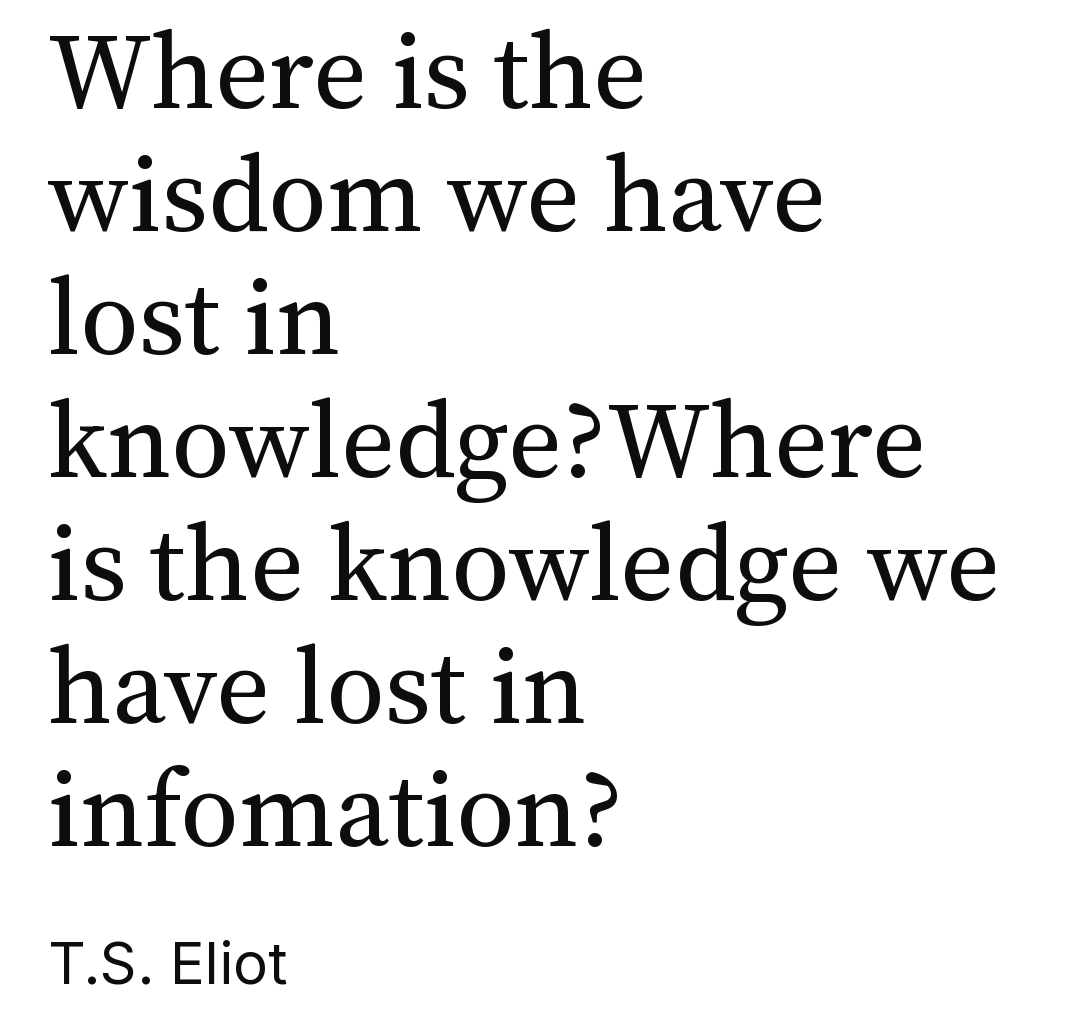
Where is the wisdom we have lost in knowledge?Where is the knowledge we have lost in infomation?
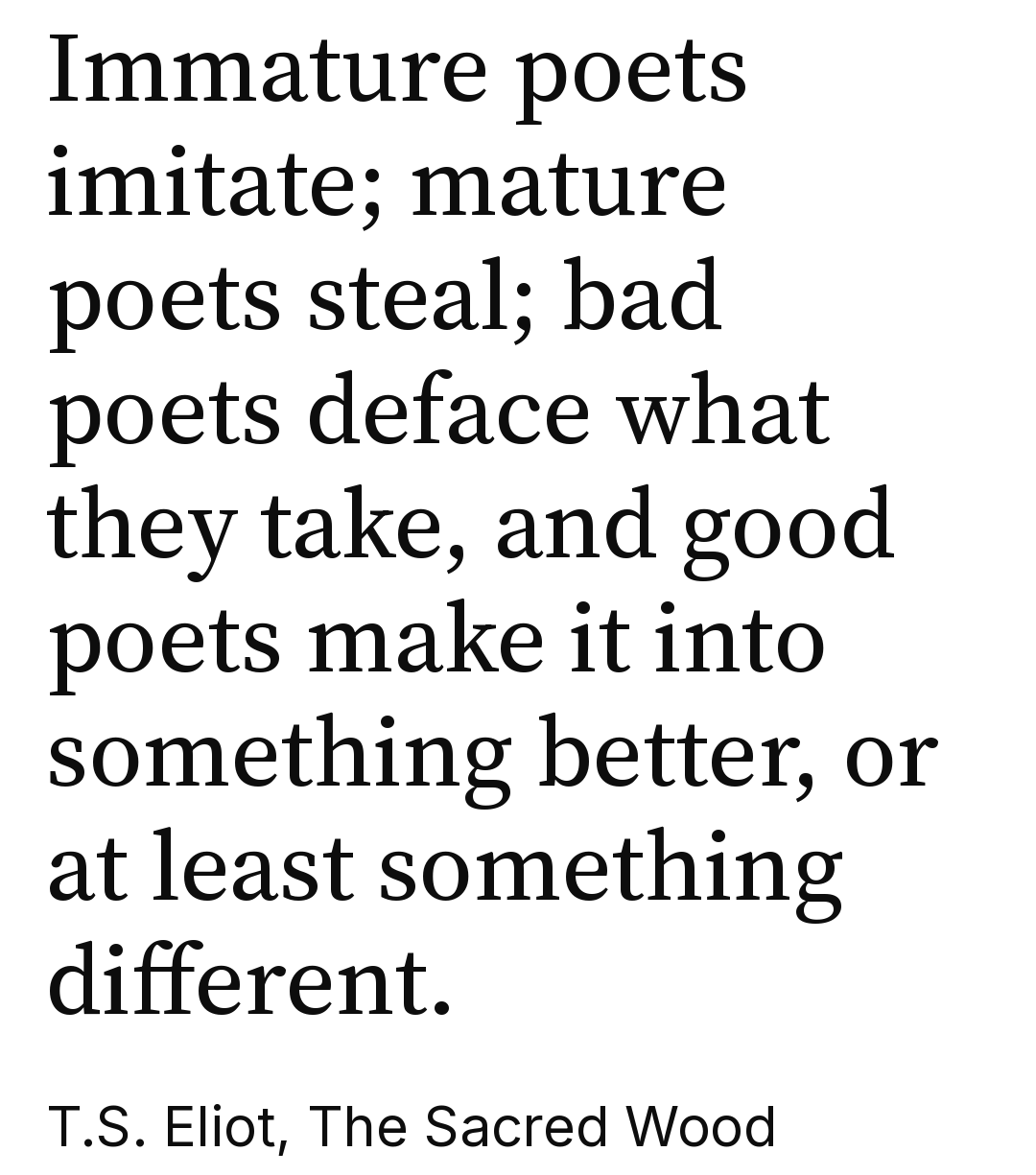
The Sacred WoodImmature poets imitate; mature poets steal; bad poets deface what they take, and good poets make it into something better, or at least something different.
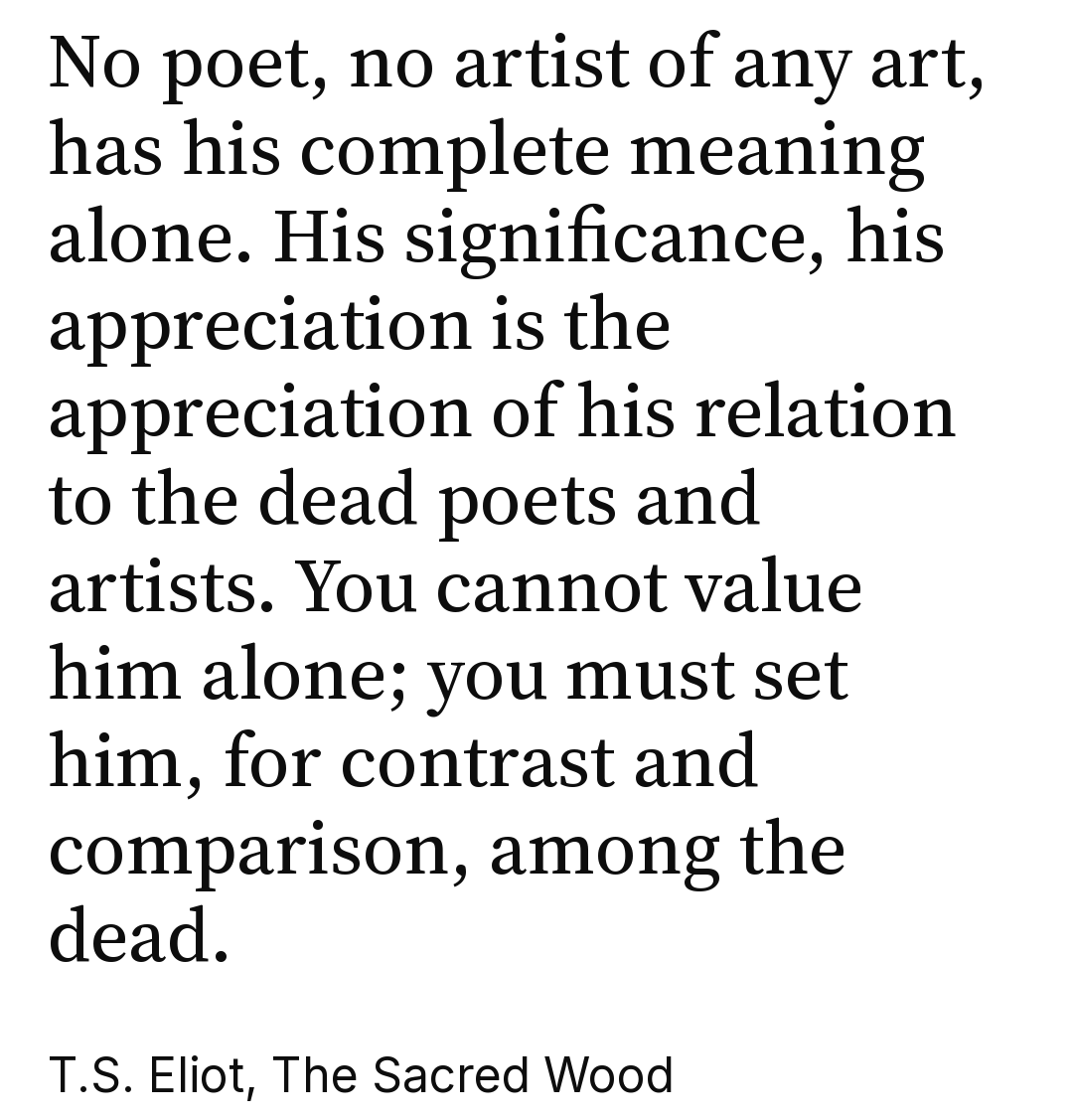
The Sacred WoodNo poet, no artist of any art, has his complete meaning alone. His significance, his appreciation is the appreciation of his relation to the dead poets and artists. You cannot value him alone; you must set him, for contrast and comparison, among the dead.
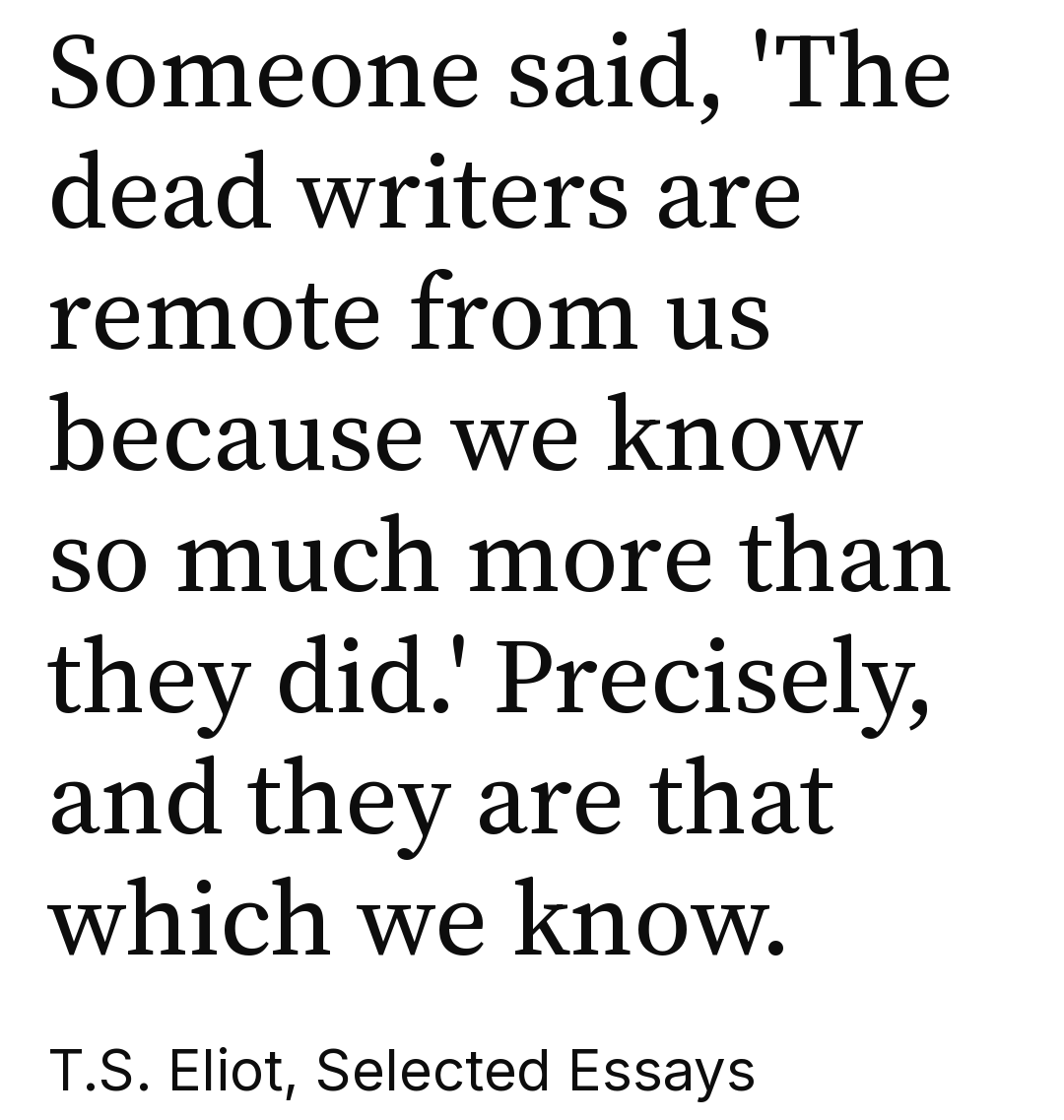
Selected EssaysSomeone said, 'The dead writers are remote from us because we know so much more than they did.' Precisely, and they are that which we know.
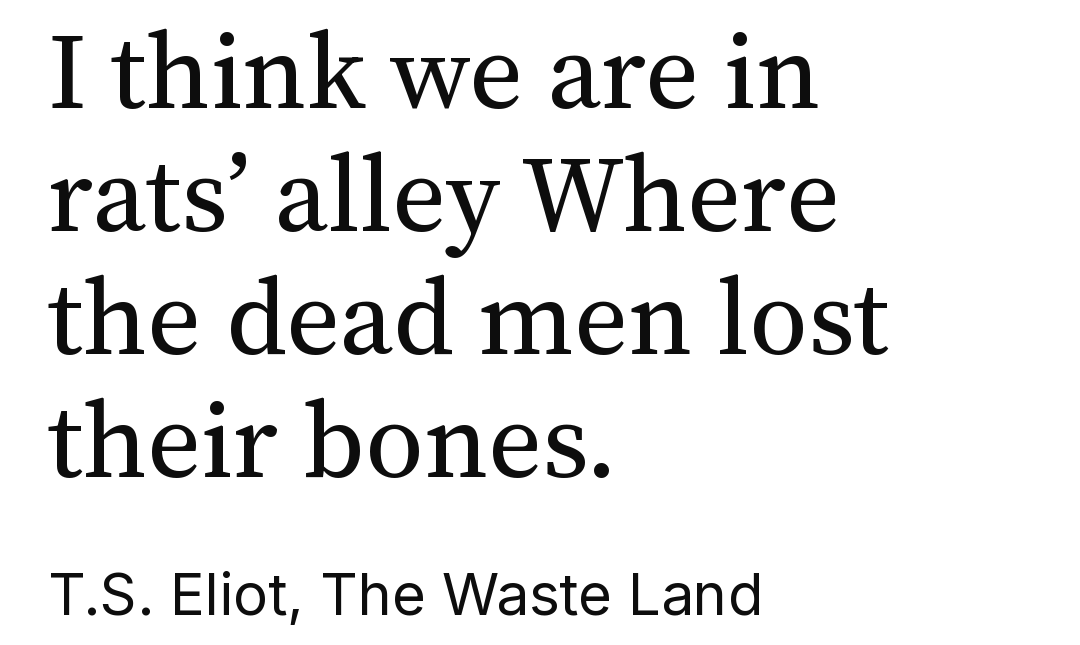
The Waste LandI think we are in rats’ alley Where the dead men lost their bones.
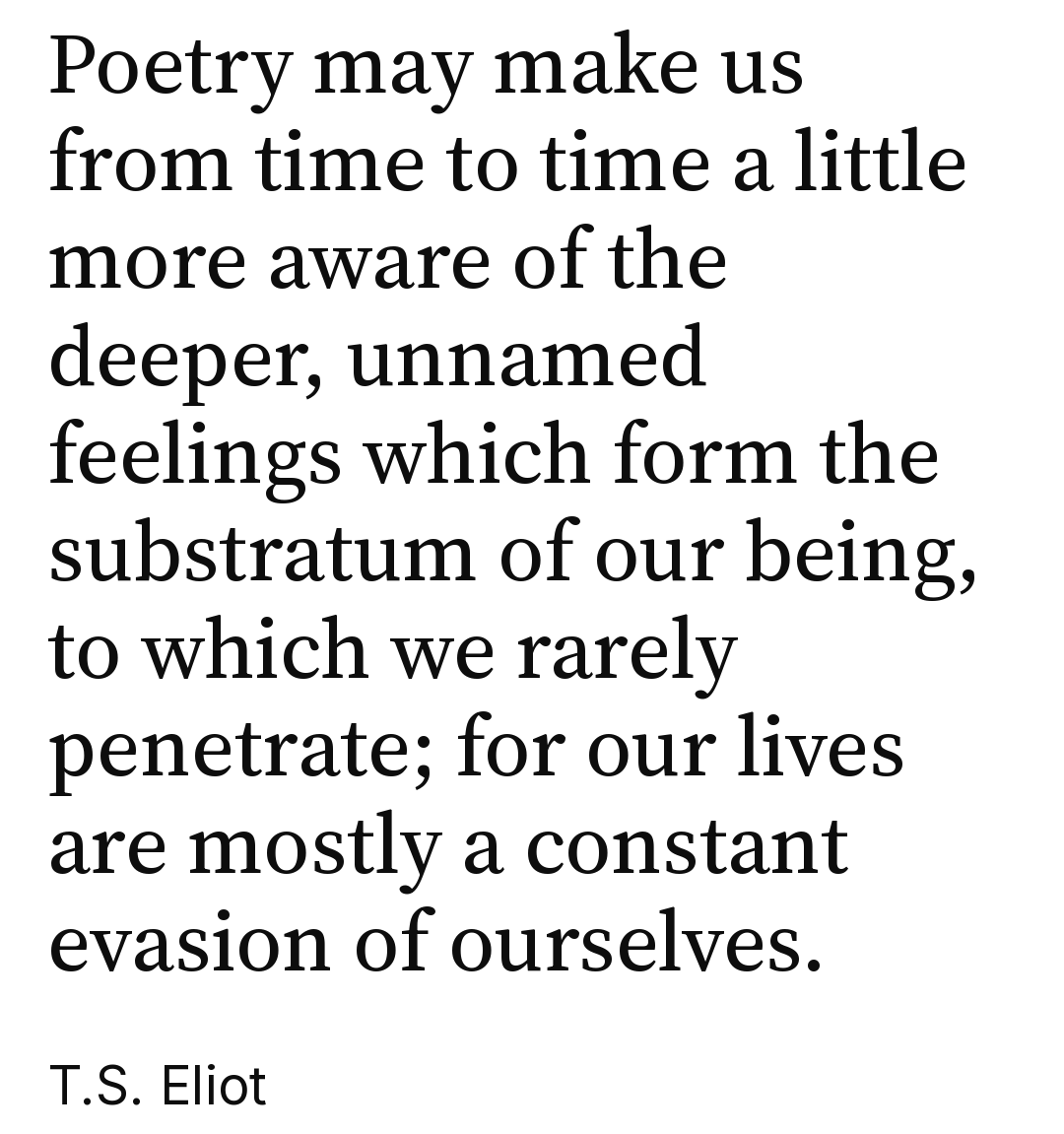
Poetry may make us from time to time a little more aware of the deeper, unnamed feelings which form the substratum of our being, to which we rarely penetrate; for our lives are mostly a constant evasion of ourselves.