- Jarod Kintz1537
- Beryl Dov878
- Debasish Mridha771
- Steve Maraboli285
- Cassandra Clare242
- Stephen Richards242
- J.K. Rowling215
- Oscar Wilde180
- John Green177
- Paulo Coelho176
- Rick Riordan153
- Criss Jami151
- C.S. Lewis142
- Nicholas Sparks142
- Albert Einstein141
- William Shakespeare135
- Friedrich Nietzsche129
- C. JoyBell C.128
- Stephen King127
- Mark Twain125
- Terry Pratchett117
- Ralph Waldo Emerson116
- Neil Gaiman114
- Richelle Mead109
- Haruki Murakami98
- Toba Beta95
- Rumi94
- Suzanne Collins94
- Amy Leigh Mercree91
- Lailah Gifty Akita91
- Shannon L. Alder88
- Santosh Kalwar87
- Jodi Picoult86
- Jane Austen84
- Kurt Vonnegut81
- Sarah Dessen81
- Carl Sagan80
- Jaachynma N.E. Agu79
- Chuck Palahniuk78
- Anonymous77
- T.F. Hodge77
- Maya Angelou76
- Virginia Woolf75
- Douglas Adams74
- Mahatma Gandhi74
- Albert Camus72
- Charles Bukowski72
- Leo Tolstoy72
- Mitch Albom71
- Amit Ray70
- Henry David Thoreau70
- Ray Bradbury66
- Sylvia Plath66
- Kahlil Gibran65
- Elizabeth Gilbert63
- Ernest Hemingway62
- Veronica Roth62
- Victor Hugo62
- Emily Dickinson61
- J.R.R. Tolkien61
- Suzy Kassem59
- Bill Watterson57
- George Carlin57
- Plato57
- Abraham Lincoln56
- Jim Butcher56
- Ayn Rand54
- Lemony Snicket54
- Steve Backley54
- Anaïs Nin53
- G.K. Chesterton53
- Dr. Seuss52
- Edgar Allan Poe51
- Colleen Houck50
- Johann Wolfgang von Goethe49
- Jonathan Safran Foer49
- Lisa Kleypas49
- Marilyn Monroe49
- George Bernard Shaw48
- F. Scott Fitzgerald47
- Martin Luther King Jr.47
- Markus Zusak46
- Bertrand Russell45
- Charlotte Brontë44
- Confucius44
- Lao Tzu44
- Lauren Oliver44
- Voltaire44
- Aristotle43
- Brian Tracy43
- David Levithan43
- Helen Keller43
- Jeaniene Frost43
- Marcus Aurelius43
- Margaret Atwood43
- Robert Frost43
- Stephen Chbosky43
- Winston S. Churchill43
- Charles Dickens42
- Rachel Caine42
No authors found.
Show morePick an author to see their quotes.
John Stuart Mill Quotes: 15
On LibertyIf all mankind minus one, were of one opinion, and only one person were of the contrary opinion, mankind would be no more justified in silencing that one person, than he, if he had the power, would be justified in silencing mankind.
UtilitarianismThe creed which accepts as the foundation of morals, Utility, or the Greatest-Happiness Principle, holds that actions are right in proportion as they tend to promote happiness, wrong as they tend to produce the reverse of happiness. By happiness is intended pleasure, and the absence of pain; by unhappiness, pain, and the privation of pleasure.
On Libertythe only way in which a human being can make some approach to knowing the whole of a subject, is by hearing what can be said about it by persons of every variety of opinion, and studying all modes in which it can be looked at by every character of mind. No wise man ever acquired his wisdom in any mode but this; nor is it in the nature of human intellect to become wise in any other manner.
On LibertyThe only freedom which deserves the name, is that of pursuing our own good in our own way, so long as we do not attempt to deprive others of theirs, or impede their efforts to obtain it.
On LibertyTruth gains more even by the errors of one who, with due study and preparation, thinks for himself, than by the true opinions of those who only hold them because they do not suffer themselves to think…
On LibertyA person whose desires and impulses are his own—are the expression of his own nature, as it has been developed and modified by his own culture—is said to have a character. One whose desires and impulses are not his own, has no character, no more than a steam-engine has character…
The tendency has always been strong to believe that whatever received a name must be an entity or being, having an independent existence of its own. And if no real entity answering to the name could be found, men did not for that reason suppose that none existed, but imagined that it was something peculiarly abstruse and mysterious.
On LibertyUnfortunately for the good sense of mankind, the fact of their fallibility is far from carrying the weight in their practical judgement, which is always allowed to it in theory; for while every one well knows himself to be fallible, few think it necessary to take any precautions against their own fallibility.
On LibertyThe will of the people, moreover, practically means the will of the most numerous or the most active part of the people; the majority, or those who succeed in making themselves accepted as the majority; type people, consequently, may desire to oppress a part of their number; and precautions are as much needed against this as against any other abuse of power.
I believe in spectacles, but I think eyes necessary too.
AutobiographyI have a hundred times heard him say, that all ages and nations have represented their gods as wicked, in a constantly increasing progression; that mankind have gone on adding trait after trait till they reached the most perfect conception of wickedness which the human mind could devise, and have called this God, and prostrated themselves before it.
On LibertySociety can and does execute its own mandates: and if it issues wrong mandates instead of right, or any mandates at all in things with which it ought not to meddle, it practises a social tyranny more formidable than many kinds of political oppression...
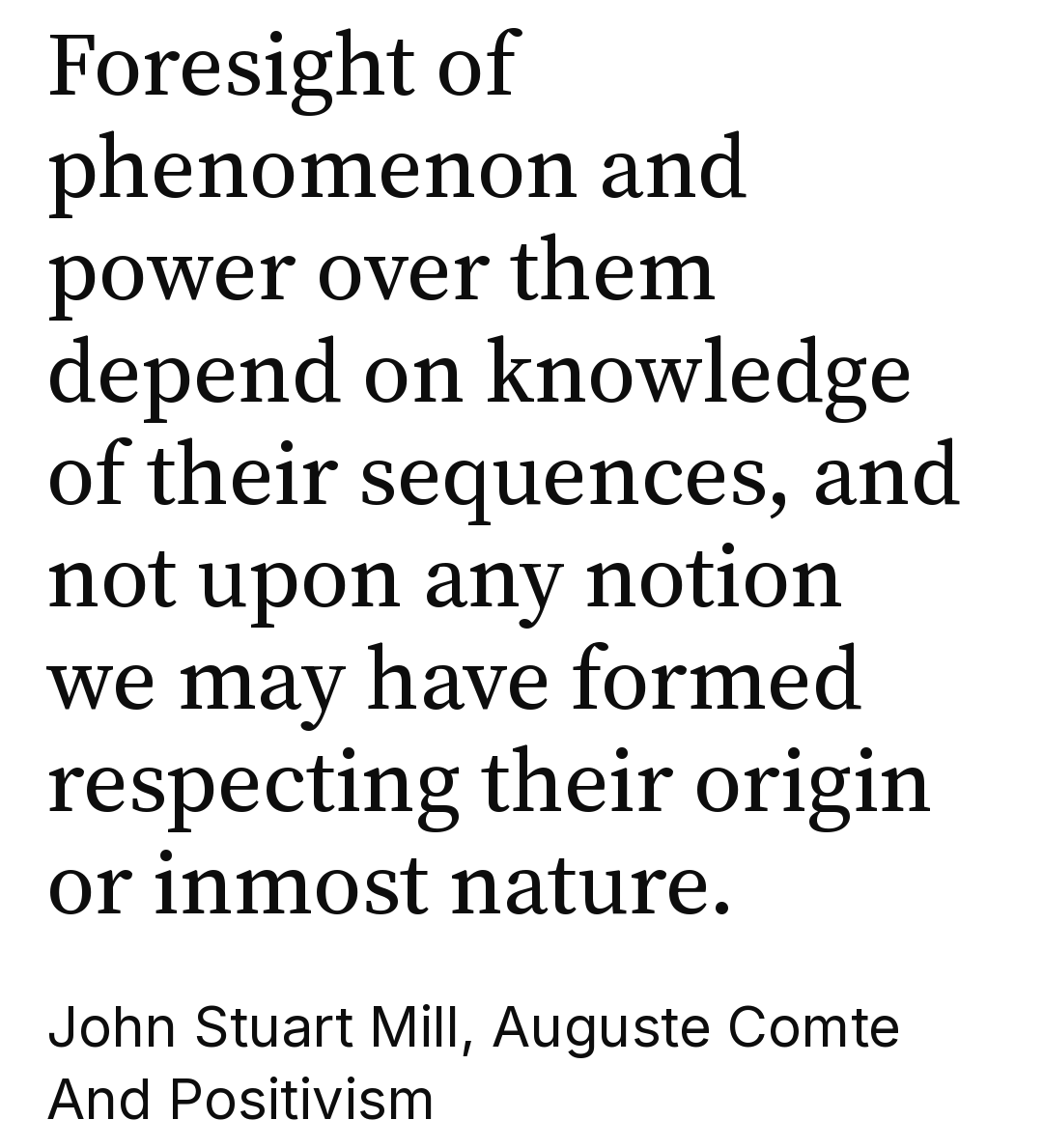
Auguste Comte And PositivismForesight of phenomenon and power over them depend on knowledge of their sequences, and not upon any notion we may have formed respecting their origin or inmost nature.
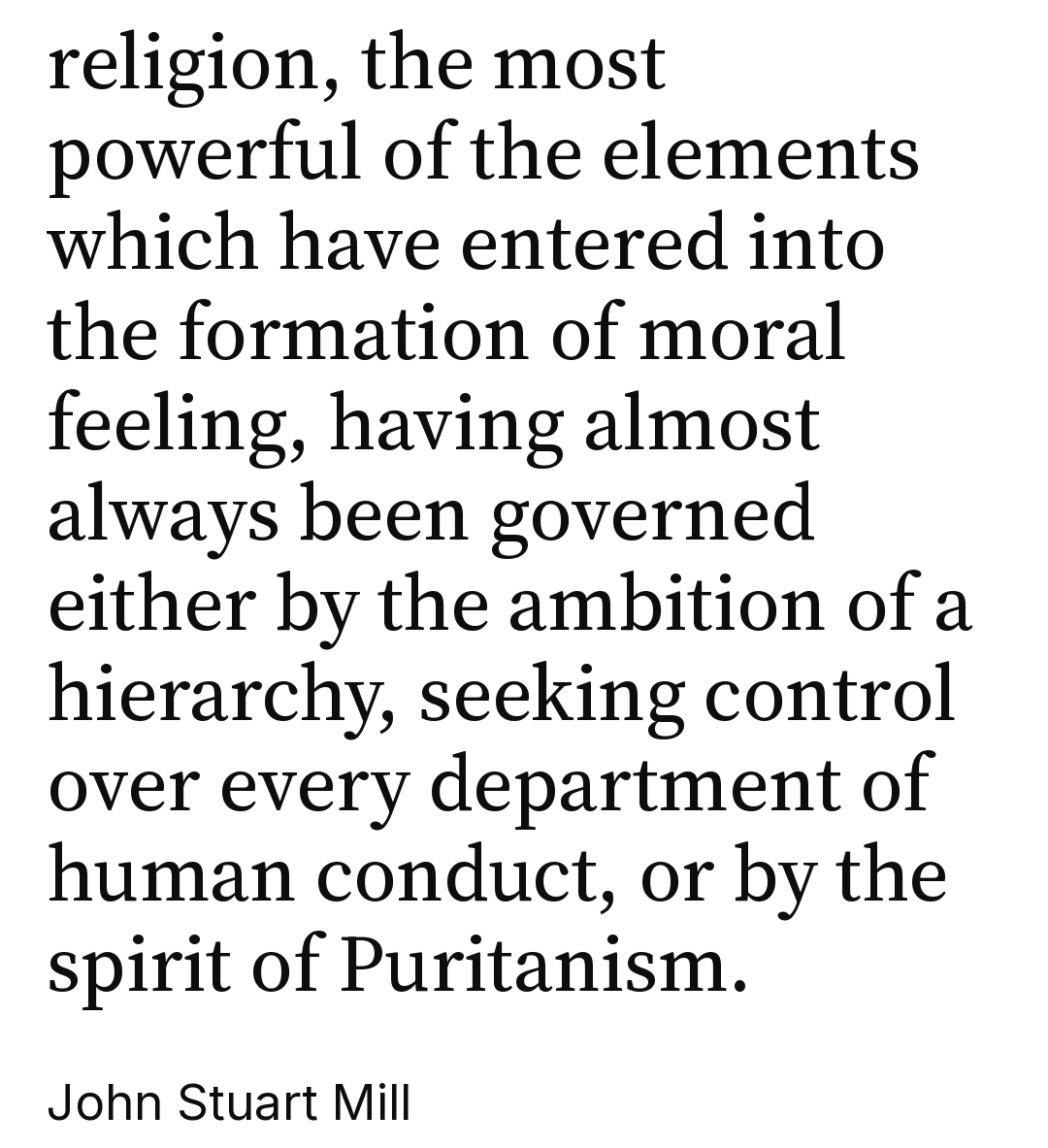
religion, the most powerful of the elements which have entered into the formation of moral feeling, having almost always been governed either by the ambition of a hierarchy, seeking control over every department of human conduct, or by the spirit of Puritanism.
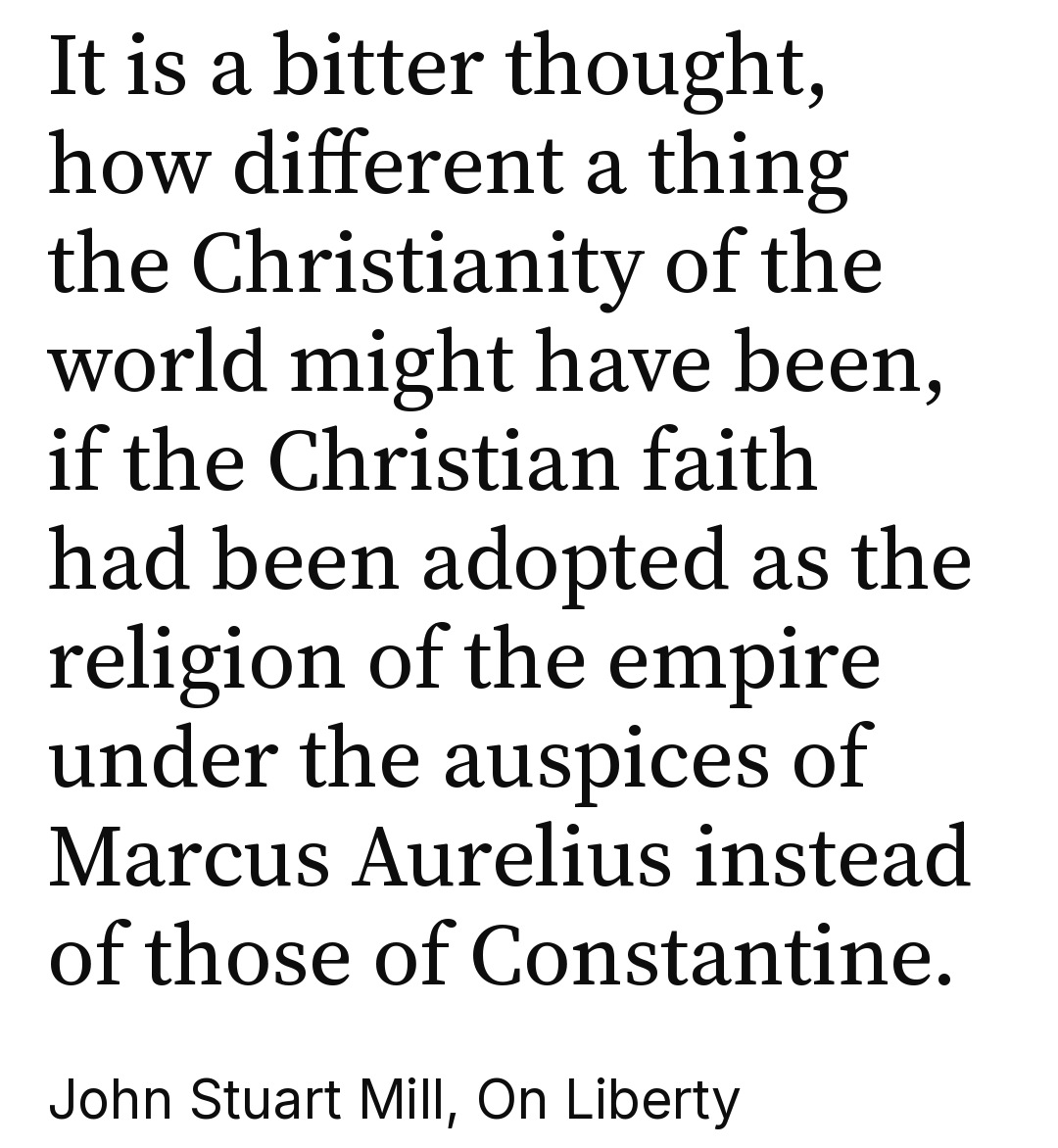
On LibertyIt is a bitter thought, how different a thing the Christianity of the world might have been, if the Christian faith had been adopted as the religion of the empire under the auspices of Marcus Aurelius instead of those of Constantine.